Services / Trade Show Project Management

Trade Show Project Management

Orchestrating the full lifecycle of a trade show presence needs early coordination across multiple stakeholders, timelines, and facility-specific protocols, particularly in the dynamic Dallas-Fort Worth market where facilities like the Kay Bailey Hutchison Convention Center Dallas set stringent operational standards.

Trade Show Project focusSchedule control for approvals
Venue checkpointHyatt Regency Dallas
Scope pressureEstablishing Project Foundations and Scope Alignment
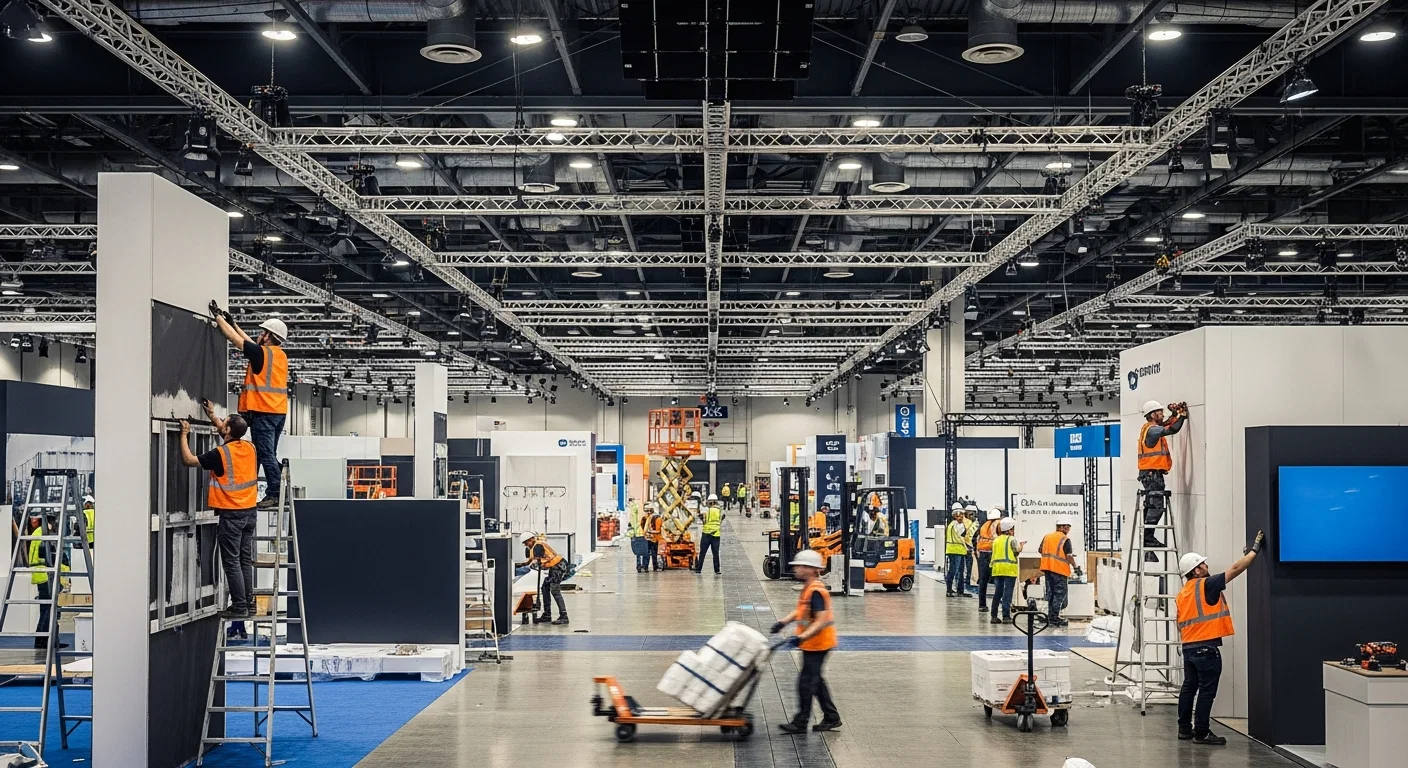
Trade Show Project Management in Dallas visual for Exhibit House of DallasService

Establishing Project Foundations and Scope Alignment

Commencing a trade show project begins with a thorough evaluation of the client's objectives, booth dimensions, and target venue characteristics, such as the expansive exhibit halls at the Kay Bailey Hutchison Convention Center Dallas that require early space confirmations to align with overall floor plans. This phase involves dissecting event specifications from sources like the venue's What to Expect for exhibitors section, which highlights the need for specific material lists and contractor designations to avoid on-site rejections. Managers compile comprehensive briefs that map exhibit components against venue constraints, ensuring that custom elements fabricated elsewhere integrate without modification.

Detailed scoping extends to forecasting resource demands based on historical patterns at Dallas venues, including power allocations specified in utilities ordering protocols at the Kay Bailey Hutchison Convention Center Dallas, where standard and high-voltage needs must be quantified early. This foundational work prevents scope creep by locking in deliverables, timelines, and KPIs, while cross-referencing service partner directories to identify compatible providers for ancillary services like rigging or telecommunications.

Crafting Timelines with Facility-specific Milestones

Timeline development incorporates mandatory lead times derived from venue operational documents, such as the docks scheduling requirements at the Kay Bailey Hutchison Convention Center Dallas, where advance reservations for loading bays are essential amid competing exhibitor demands during major shows. Managers construct Gantt charts that sequence design approvals, fabrication milestones, shipping handoffs, and installation windows, allocating buffers for customs clearance if international elements are involved, all calibrated to Dallas Market Hall's event calendars that often feature Back to Back activations.

Integration of utility order deadlines, as detailed in the Kay Bailey Hutchison Convention Center Dallas exhibitors utilities page, forms a critical path, with managers stipulating submission windows—typically weeks prior—to secure electrical, plumbing, and data hookups without premium rush fees. This phased approach also accounts for dismantle protocols, ensuring load-out aligns with venue move-out schedules to facilitate prompt space turnover, thereby maintaining positive relations for future bookings across Dallas-Fort Worth facilities like the Fashion Industry Gallery.

  • Dock reservation protocols mandate 30-60 day advance notices
  • Utility orders require detailed schematics for approval
  • Installation windows tied to general contractor move-in sequences

Synchronizing Service Partners and Contractors

Coordination with approved service partners, as listed on the Kay Bailey Hutchison Convention Center Dallas service partners page, requires managers to verify contractor credentials against venue rosters before engagement, preventing disqualification at load-in. This involves facilitating communications between exhibitor-appointed contractors handling bespoke installations and general contractors overseeing shared infrastructure, ensuring harmonious workflows in multi-booth environments like those at Omni Dallas Hotel conventions.

The synchronization process includes joint pre-construction meetings to align on shared resources such as forklifts or scissor lifts, drawing from venue exhibitor guidelines that stress collaborative planning. Managers track certifications and insurance proofs, mitigating liabilities while optimizing handoffs, particularly in venues like Hyatt Regency Dallas where hybrid exhibit-hospitality setups demand nuanced contractor interfaces.

Orchestrating Logistics and Material Flows

Logistics management centers on dock utilization strategies informed by the Kay Bailey Hutchison Convention Center Dallas docks information, where managers schedule specific arrival windows to minimize queuing during peak freight periods common in Dallas trade show seasons. This entails coordinating carriers for Just in Time deliveries, pallet configurations compliant with venue weight limits, and protective crating to withstand multi-handlings, all documented in shipping manifests shared with venue operations teams.

For venues like Dallas Market Hall, logistics plans adapt to adjacent parking constraints by prioritizing consolidated shipments, reducing truck idling and expediting offloading. Post-installation, dismantle logistics reverse-engineer the sequence, with managers confirming empty truck manifests to release deposits, ensuring compliance with venue cleanliness standards across the Fashion Industry Gallery's specialized event formats.

  • Freight coordination with advance dock manifests
  • Pallet jack and fork lift sequencing plans
  • Post-dismantle debris removal verifications

Managing Utilities and Technical Infrastructure

Utility procurement follows strict protocols from the Kay Bailey Hutchison Convention Center Dallas exhibitors utilities page, where managers submit scaled drawings specifying wattages, circuit breakers, and line placements weeks in advance to integrate with hall power grids. This phase anticipates AV integrations, data lines, and HVAC adjustments, cross-checking against booth layouts to prevent overloads during live demos common at Dallas venues.

Technical setups extend to rigging approvals for suspended elements, with managers compiling load calculations and anchor point diagrams per venue engineering reviews. In hotel-based events at Omni Dallas Hotel, utility coordination navigates sub-metered systems, requiring specific metering forecasts to control ancillary costs.

Monitoring Budgets and Performance Metrics

Budget oversight tracks expenditures against baselines, incorporating venue fee schedules for docks, utilities, and service partners at the Kay Bailey Hutchison Convention Center Dallas, with managers implementing variance alerts for overtime or change orders. Real-time dashboards capture labor hours, material variances, and contingency draws, enabling proactive adjustments amid fluctuating freight rates in the Dallas-Fort Worth logistics hub.

Performance metrics evaluate on-time milestones, stakeholder satisfaction via post-phase surveys, and ROI proxies like booth traffic correlations, refining future projects. This financial stewardship ensures fiscal discipline without compromising quality in competitive environments like Dallas Market Hall shows.

  • Weekly Cost to Complete forecasts
  • Change order approval workflows
  • Final reconciliation audits

Conducting Post-Event Analysis and Optimization

Wrap-up phases compile as-built documentation, including utility consumption logs from Kay Bailey Hutchison Convention Center Dallas invoices and dock usage reports, feeding into debrief sessions that dissect successes and friction points. Managers archive vendor performance scores and lessons learned, such as refined dock sequencing for Fashion Industry Gallery events, to streamline subsequent activations.

This analytical loop identifies efficiencies like bulk utility pre-orders or consolidated service partner bids, enhancing scalability for recurring Dallas-Fort Worth engagements. Comprehensive reporting distills insights into actionable playbooks, positioning projects for elevated execution in evolving venue landscapes.

FAQ

Frequently Asked Questions About Trade Show Project Management

What does trade show project management typically include for Dallas venues?

It covers scope definition, timeline creation with dock and utility lead times, service partner coordination per Kay Bailey Hutchison Convention Center Dallas lists, logistics planning, budget tracking, and post-event reviews, ensuring alignment with venue protocols across Dallas Market Hall and similar facilities.

How far in advance should timelines account for venue docks and utilities?

Plans must factor 30-60 days for dock reservations and utility orders at the Kay Bailey Hutchison Convention Center Dallas, with earlier submissions for high-demand shows to secure slots and avoid rush surcharges.

Why is service partner coordination critical in Dallas trade shows?

Venues like the Kay Bailey Hutchison Convention Center Dallas require approved contractors for compliance, necessitating early verification and synchronization between exhibitor-appointed and general contractors to prevent load-in denials.

How are budgets managed amid facility-specific fees?

Through variance tracking against dock, utility, and partner costs, with dashboards monitoring expenditures and approvals for changes, tailored to facilities like Omni Dallas Hotel metering systems.

What role does post-event analysis play?

It reviews actuals against plans, archives performance data from utilities and docks, and generates optimizations for future Dallas-Fort Worth projects at places like Fashion Industry Gallery.

Can project management adapt to different venue types?

Yes, it adjusts for convention centers like Kay Bailey Hutchison, exhibit halls like Dallas Market Hall, and hotels like Hyatt Regency Dallas, each with distinct dock, utility, and partner rules.

Start the conversation

improve Your Trade Show Execution

Secure coordinated project management for your next Dallas event. Reach out to align timelines, partners, and logistics with venue standards today.

Start your scope